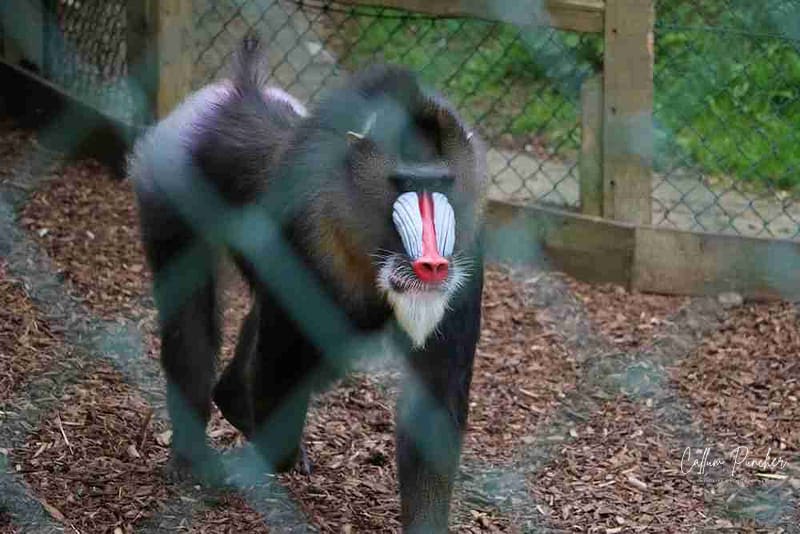

Mandrills are a fascinating species of primates that are native to the rainforests of Africa. I love their striking appearance, with vividly coloured fur, distinctive facial markings, and impressive size. The mandrill is the largest species of monkey and I consider them to be one of the most colourful primates in the world.
Male mandrills are much more brightly colored than females and have a distinctive blue and red crest on their forehead. They also have brightly colored rumps that range from deep blue to bright red. The colors of the male mandrill are used to attract females during mating season, and the brighter the colors, the more attractive the male is to potential partners.
Aside from their striking appearance, mandrills are also known for their social behavior. They live in large groups that can number in the hundreds and have a complex social hierarchy. Female mandrills are dominant over males and have a high degree of social cohesion within their groups. They also have a range of vocalizations and facial expressions that they use to communicate with one another.
Mandrills are also an important part of the ecosystem in which they live. They are omnivores and eat a variety of fruits, insects, and small animals. They play a crucial role in seed dispersal, as they eat fruit and excrete seeds in their feces. This helps to maintain a healthy forest ecosystem and contributes to the overall health of the rainforest.
In spite of their importance to the ecosystem, mandrills are currently facing a number of threats. Habitat loss, hunting for their meat, and the pet trade are all putting pressure on the population. Conservation efforts are underway to protect the species and ensure that they continue to thrive in their natural habitat.
In this article, we will explore some fascinating facts about mandrills and their behavior, as well as the challenges facing this unique species of primate.
Fun Facts About Mandrills: Discovering Their Social Life, Intelligence, and Unique Traits
When it comes to the animal kingdom, few are as fascinating and unique as the mandrill. With their striking appearance, impressive social structures, and intelligent behavior, these primates are a true wonder of nature. Here are some fun facts about mandrills that will help you appreciate these incredible animals even more:
- They are the world’s largest species of monkey. Mandrills are part of the Old World Monkey family and can grow to be up to 120 cm (47 in) long and weigh up to 120 pounds.
- Their colorful faces are a social signal. The bright colors of a mandrill’s face are not just for show. They use them as a visual signal to other mandrills about their rank, mood, and intentions. This helps maintain a stable social structure within the group.
- They have a complex social hierarchy. Mandrills live in large groups with a dominant male leading the group and several females and juveniles. The male will use his bright colors and intimidating size to establish his dominance and protect the group.
- They are highly intelligent. Mandrills have been shown to have cognitive abilities on par with great apes like chimpanzees. They can solve problems, use tools, and even understand basic math concepts.
- They have an incredible sense of smell. Mandrills have a highly developed sense of smell, which they use to communicate with one another, locate mates, and find food.
- They are skilled climbers and jumpers. Mandrills spend much of their time in trees, where they are able to climb and jump with remarkable agility. Their powerful arms and legs allow them to jump distances of up to 30 feet.
- They are omnivores. Mandrills eat a varied diet of fruits, nuts, seeds, insects, and small animals. They have even been known to eat poisonous millipedes, which they use to repel insects and parasites.
- They are facing threats from habitat loss and hunting. Mandrills are native to the rainforests of Central and West Africa, but their habitat is being destroyed at an alarming rate. Additionally, they are hunted for their meat and their body parts, which are used in traditional medicine.
Despite the challenges they face, mandrills remain one of the most fascinating and impressive animals in the world. By learning more about these incredible creatures, we can all work to protect them and their habitat for generations to come.
Conservation Efforts and Threats Facing Mandrills: Why We Need to Protect These Fascinating Creatures
Mandrills are one of the most fascinating primates in the world, known for their brightly colored faces and striking behavior. However, these magnificent creatures are facing numerous threats that make them vulnerable to extinction.
Conservation Efforts for Mandrills
To protect Mandrills and their habitats, different organizations are working together to establish conservation efforts. Some of these initiatives include:
- Educating Local Communities on the Importance of Protecting Mandrills: Local communities that live in close proximity to Mandrills play a crucial role in their conservation. By educating them about the importance of protecting these primates, they can learn to live in harmony with Mandrills and participate in conservation activities to protect their habitats.
- Establishment of Protected Areas: Protected areas provide critical habitats for Mandrills and other endangered species. These areas are set aside from human development, allowing for the natural ecosystems to thrive and protect the biodiversity of the area.
- Collaboration between Scientists and Local Communities: Scientists are working closely with local communities to study the Mandrill, monitor their populations, and develop management plans for their conservation.
Threats Facing the Mandrill
Mandrills face numerous threats that put them at risk of extinction. Some of these threats include:
- Habitat Destruction: Mandrill rely on dense forests for their survival, but deforestation due to human activities like logging, mining, and agriculture is destroying their habitats.
- Poaching: Mandrills are hunted for their meat, which is considered a delicacy in some parts of the world, and their skins, which are used for traditional clothing and cultural ceremonies.
- Climate Change: The changes in temperature and rainfall patterns due to climate change can disrupt the ecosystems that Mandrills depend on, affecting their food sources and habitat.
Why We Need to Protect Mandrills
Mandrills play an essential role in maintaining ecological balance by dispersing seeds and controlling insect populations. Their conservation is crucial for the biodiversity of the forest ecosystem and the survival of other endangered species. Additionally, the Mandrill holds significant cultural and spiritual importance for the people living in their habitats.
In conclusion, Mandrills are unique creatures that require our attention and protection. We need to work together to conserve their habitats and reduce the threats they face. Educating ourselves and others about the importance of protecting these primates can lead to long-lasting conservation efforts.
My Experience
I had an awesome Mandrill Experience at Colchester Zoo there I shadowed a keeper and assisted in feeding them in such a way to provide them with enrichment in their life in captivity. It was a fantastic experience that I would highly recommend.