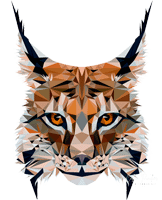


The Amur Leopard is critically endangered and one of the rarest big cats in the world. Found primarily in the temperate forests of the Russian Far East and north-eastern China, this elusive feline is known for its beautiful, thick coat, which provides insulation against the cold. The Amur Leopard plays a vital role in its ecosystem, helping to control prey populations also.
Size
Amur Leopards are medium-sized cats, with males weighing between 32-48 kg (71-106 lbs) and females ranging from 25-43 kg (55-95 lbs). They have long legs, a thick neck, and a long tail, which helps them maintain balance while climbing. Their distinctive coat features a pale cream background with widely spaced spots, making them well-camouflaged in their forest habitat.
Location
Amur Leopards primarily inhabit the temperate forests of the Russian Far East, particularly in the Land of the Leopard National Park which covers their whole breeding range. They prefer mixed forests that provide essential cover for stalking prey. These leopards are adapted to cold climates and can often be found in snowy areas during winter.
Population
The Amur Leopard is classified as Critically Endangered, with an estimated population of fewer than 100 individuals remaining in the wild. Their population has been severely affected by habitat loss, poaching, and loss of prey species. Conservation efforts are underway to protect their habitat and increase their numbers. The efforts are working and the population is now stable and potentially increasing!
Felidae Family Group

Amur Leopards belong to the family Felidae, which includes all species of cats. They are a subspecies of the leopard (Panthera pardus) and are closely related to other big cats such as the Amur tigers. There are 41 species in this family, but including subspecies, there are 77-92 different creatures. The Amur leopard is one of the 9 (although sometimes debated as 8) subspecies of leopard coming from around Africa, the Middle East and West Asia.
Diet
Amur Leopards are carnivorous and primarily hunt ungulates such as roe deer, sika deer, and hares. They are solitary hunters, using their excellent climbing skills to stalk and ambush prey from trees. Their diet may vary depending on the availability of prey in their habitat.
Predators
Adult Amur Leopards have few natural predators, but they are vulnerable to threats from poaching and habitat destruction. The main threats come from illegal hunting for their beautiful fur and loss of habitat due to logging and agricultural expansion. Although some cubs do not reach adulthood because of natural predators like wolves, bears and other large cats.
Fun Facts
Did you know, Amur Leopards are known for their incredible agility and can leap up to 10 feet in the air! They also have spots that are unique to each individual, much like a fingerprint in humans. Interestingly, these leopards have been known to travel great distances in search of food, with some individuals roaming up to 30 kilometres (18.6 miles) in a single night.