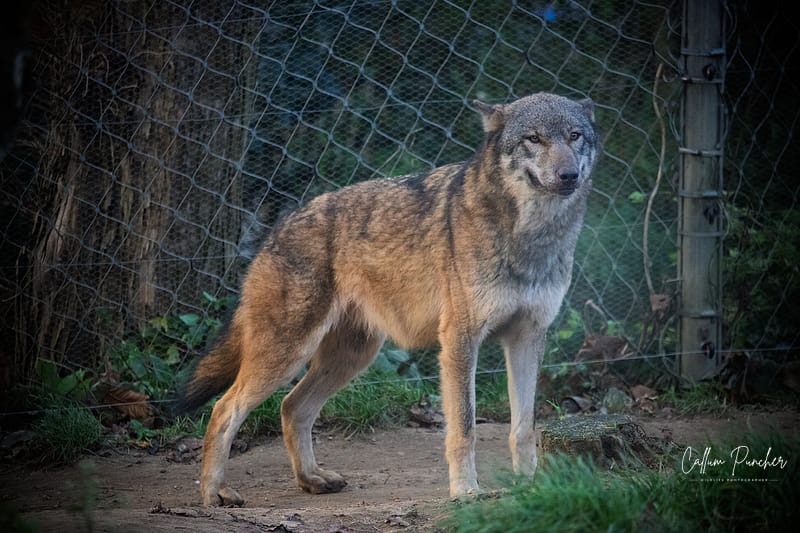
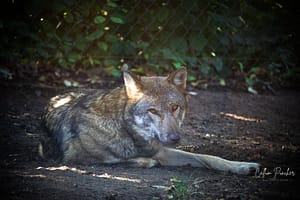
The Eurasian Grey Wolf is a highly adaptable and intelligent carnivore, native to the forests, grasslands, and tundra of Europe and Asia. Known for its strong social structures and pack behaviour, the Grey Wolf plays a crucial role in maintaining the balance of ecosystems as an apex predator. These magnificent animals have long been a symbol of wilderness and resilience.
Size
Eurasian Grey Wolves typically weigh between 25-50 kg (55-110 lbs) and stand about 80-120 cm (24-35 inches) tall at the shoulder. Their body is adapted very well to the style of it’s habitat and prey, long legs, and a bushy tail are some examples. Their fur ranges from grey to brown, often with a mix of black and white, providing excellent camouflage in their natural habitats. Wolves have powerful jaws and sharp teeth, adapted for hunting and consuming prey.
Location
Eurasian Grey Wolves inhabit a diverse range of environments across Europe, Northern Asia, and parts of the Middle East, including forests, tundra, and grasslands. Unlike their name suggests, Eurasian grey wolves can also be found in North America but only in the far North. They prefer areas with ample prey and cover for hunting, often establishing territories that can span several hundred square kilometres. Although much of their range has shrunk due to hunting, most populations are stable.
Population
The Eurasian Grey Wolf is classified as Least Concern, with stable ,and even growing, populations in many areas, though they face threats from habitat loss and hunting in some regions. Conservation efforts focus on habitat protection and promoting coexistence with local communities to ensure their survival. The worldwide population is estimated to be 200,000-250,000 but it is slowly rising.
Canidae Family Group
Eurasian Grey Wolves belong to the family Canidae, which includes all dog species. They are part of the genus Canis, which encompasses wolves, dogs, and other canids. The grey wolf, which the Eurasian grey wolf is a subspecies of, is actually the largest species in the Canidae family. Wolves are social animals that live in packs, typically consisting of a breeding pair and their offspring.
Diet
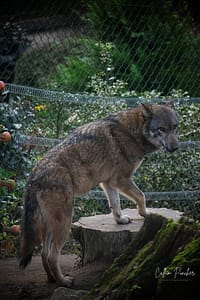
Eurasian Grey Wolves are carnivorous and primarily hunt large ungulates (hoofed mammals) such as deer, elk, and wild boar. They are known for their cooperative hunting strategies, working together in packs to take down larger prey. Wolves also scavenge and will consume smaller mammals, birds, and even fruits when necessary. Their diverse diet and strategic teamwork are one of the reasons that this species of wolf has survived for 400,000 years!
Predators
Adult Eurasian Grey Wolves have very few natural predators as they are classed as apex predators, but they can be threatened by humans through hunting and habitat encroachment. Human-wildlife conflict can arise when wolves prey on livestock, leading to purposeful killings. Conservation programs aim to mitigate these conflicts and promote wolf conservation, especially in intensively farmed areas.
Fun Facts
Did you know that wolves can travel up to 30 miles (48 km) in a single day while searching for food, showcasing their endurance and adaptability. The ancestors of the modern grey wolves can actually be traced back to over 5 million years ago, although this rodent hunter, Canis Lepophagus, is not what we would class as a ‘true’ modern wolf.