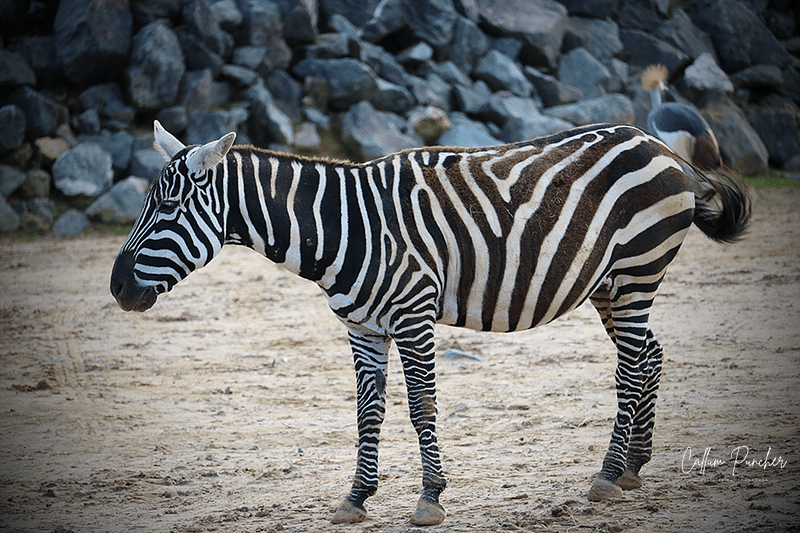
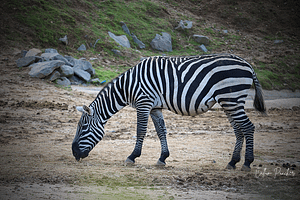
The Maneless Zebra is a subspecies of the plains zebra found primarily in the grasslands and savannas of southern and eastern Africa. Known for its distinctive black and white stripes, the Maneless Zebra is an iconic symbol of African wildlife. These zebras play a crucial part in their ecosystem, they contribute to grazing pattern and keep savannah habitat intact.
Size
Maneless Zebras typically weigh between 220-350 kg (485-770 lbs) and stand about 1.25-1.45 meters (4.1-4.7 feet) tall at the shoulder. Unlike other zebra species, males often lack the long mane that is characteristic of zebras, which is how they get their name. Their coats feature bold black and white stripes that serve as camouflage and help regulate their body temperature.
Location
Maneless Zebras inhabit a variety of habitats, including grasslands, savannas, and open woodlands in countries such as South Sudan, Uganda, and Kenya. They prefer areas with abundant grass and access to water sources, which are crucial for their survival and grazing needs. They are found across 11 different zoos in captivity with only 40 individuals in these zoos.
Population
The Maneless Zebra is classified as Least Concern, with stable populations across its range. The exact number is unknown but it is estimated that there are around 300-450 individuals left in the wild. However, they face threats from habitat loss and hunting in some regions. Conservation efforts focus on habitat protection and promoting sustainable land management practices to ensure their survival.
Equidae Family Group
Maneless Zebras belong to the family Equidae, which includes all species of horses and zebras. They are part of the genus Equus, characterized by their unique social behaviours and adaptations to grazing environments. Zebras are social animals that often live in herds, forming strong bonds with other members of their group. They are a subspecies of the plains zebra along with the Burchell’s zebra and Chapman’s zebra to name a two.
Diet
Maneless Zebras are herbivores, primarily feeding on grasses, leaves, and shrubs. They are known for their selective grazing habits and can consume a wide variety of vegetation. They will travel up to 250km (153 miles) in search of lush grassland and water. Their grazing helps maintain the health of their habitats by promoting new growth and maintaining biodiversity.
Predators
Maneless Zebras face threats from natural predators such as lions, hyenas, and wild dogs. Their social structure and herding behavior provide some protection against predators, as they can confuse and deter attackers. The greatest threats to their populations come from habitat destruction and hunting, although ongoing conservation efforts are slowly stopping this.
Fun Facts
Did you know that maneless zebras will often combine herds with other grazing animals such as wildebeests and antelopes for extra protection against predators. Maneless zebras also have an easy way of identifying individuals, each zebra has its very own stripe pattern, much like a fingerprint just on a much larger scale.