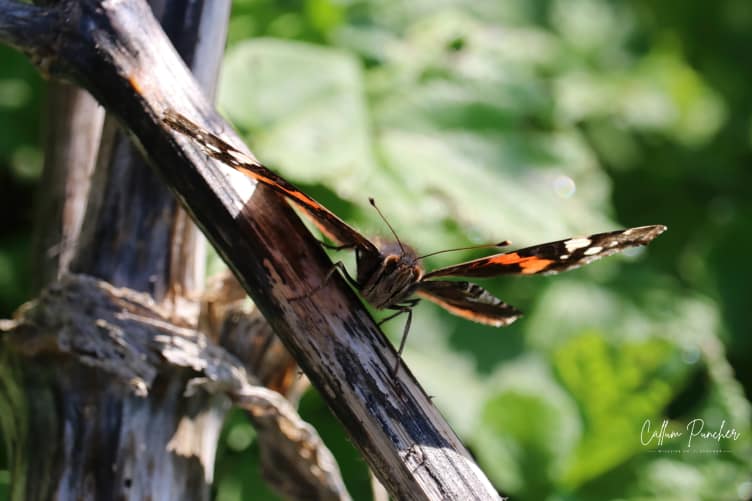
The red admiral is a medium-sized butterfly with a stunning red colour on it’s wings that give them their name. Because they live in mainly the far northern or far southern part of the world, it has to have a hairy body to keep it’s body temperature stable.
Size
The red admiral has a length of around 4.5 to 7.6cm but most of that is it’s wingspan which is 3.7 to 7.2cm in width. The weight of these butterfly’s are unknown because it is so hard to weigh them. Which means they are under 1 gram; that’s about the same as a tiny raisin.
Location
They are found all over the world in temperate regions except South America and places that have temperatures of under 5 degrees. Usually around the cold areas of the planet, they are one of the last species of butterfly to be spotted. Red admirals live in forests, grassland/meadows, wetlands and many other moist habitats.
Population
As they are insects and they are so widespread, scientists have not been able to count their exact worldwide population. But what they do know is that, due to climate change, the numbers have risen worldwide especially in the UK. The population in the British Isles has in 2023 had gone up by an incredible 400%. They are not under any threat.
Nymphalidae Family Group
The red admiral belongs to the family group nymphalidae or brush footed insects (according to Linnaeus 1758). This is the largest family of butterflies known to science. The species in nymphalidae include Monarchs, painted ladies, marsh fritillary and 51 more species. These butterflies in this group are all medium to large in size.
Diet
Their diet varies for different stages of their life’s. The red admiral’s caterpillar eats plants such as nettles and plants in the Urticaceae family. On the other hand for their butterfly/adult stage they will commonly eat rotting fruit, tree sap, bird droppings, and nectar from daises, milkweed and goldenrod. This is why this species needs meadows and woodland with other wildlife to survive.
Predators
Exactly like other insects, these butterflies are usually near the bottom of the food chain because of their size. Quick birds, swift bats are their largest predators, but carnivorous wasps, bigger insects and spiders will all help themself to a protein filled snack if they can catch them. If you see a wild red admiral and they fold their wings in, when you look closely it is camouflaged on its wing for protection.
Fun Facts
Did you know that red admirals will travel several thousand kilometres in yearly migrations but because their lifespan is only a couple of months, it takes multiple generations to complete this journey. So on the way females have to lay eggs in different parts of the world in different habitats.
If you enjoyed reading this you may also enjoy reading about Red Pandas